 OntarioGrapes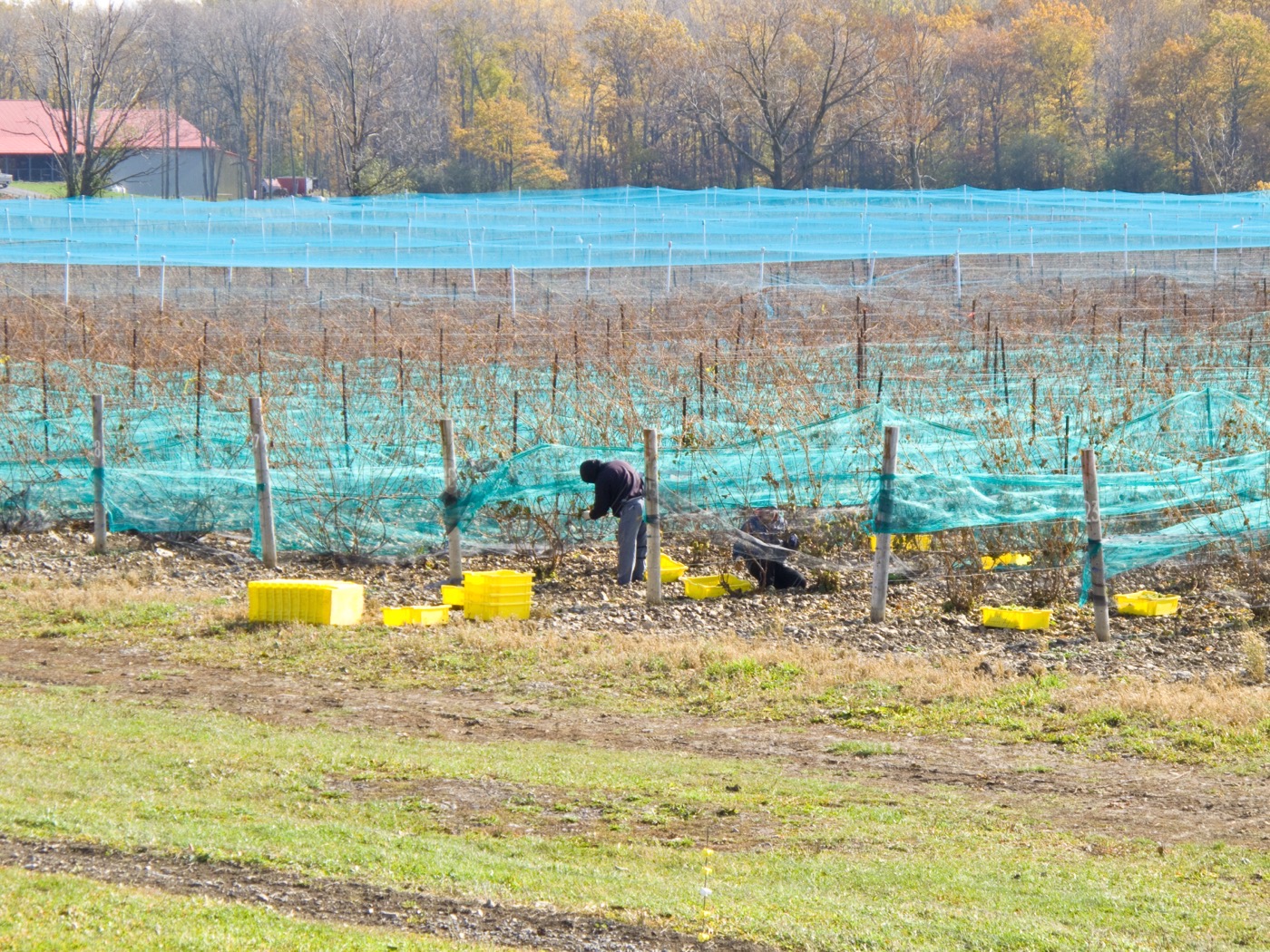
The vine year
The Ontario vine year, month by month
What is happening in an Ontario vineyard at any point in the calendar, what the grower is doing about it, and what can go wrong. Dates are typical for Niagara; the Lake Erie North Shore runs a week or two ahead and Prince Edward County a week or two behind.
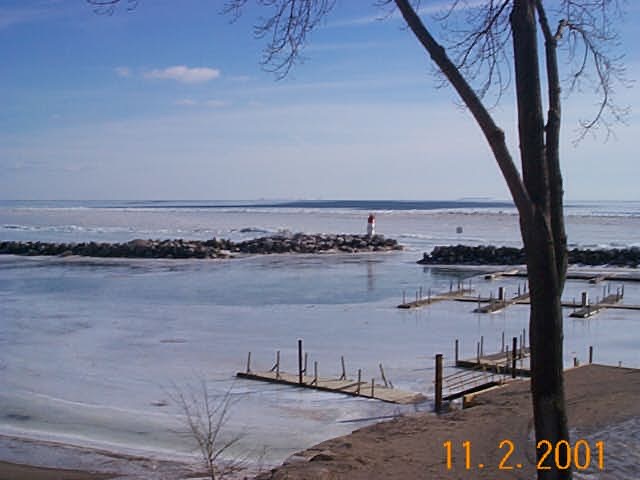
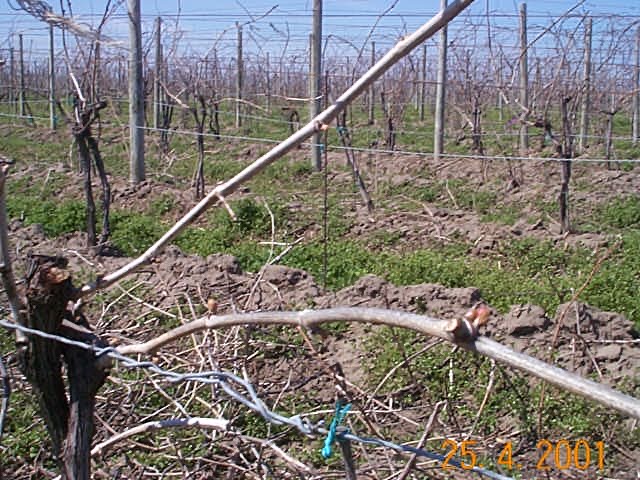
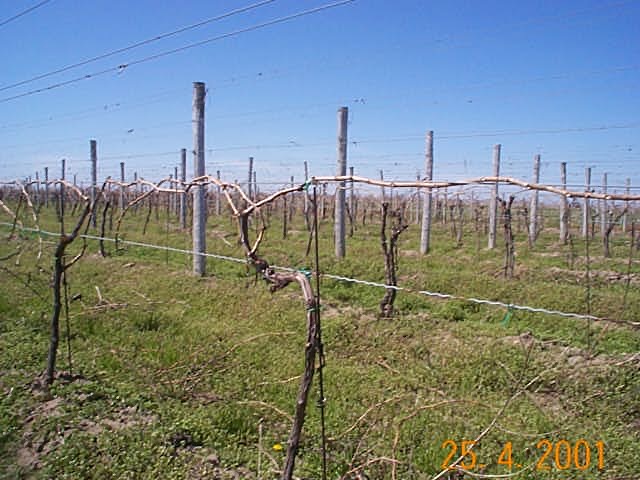
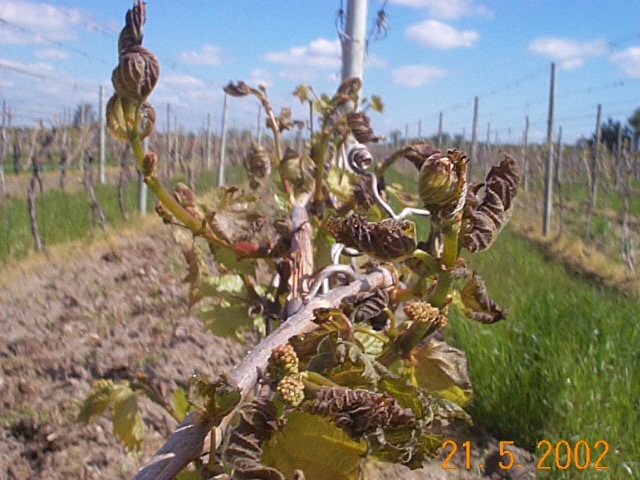
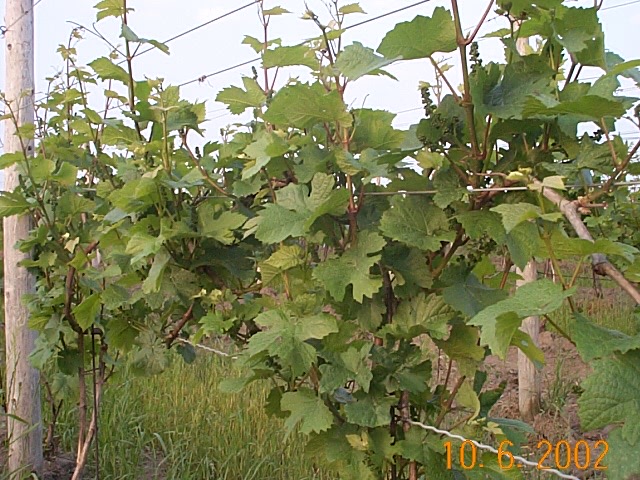
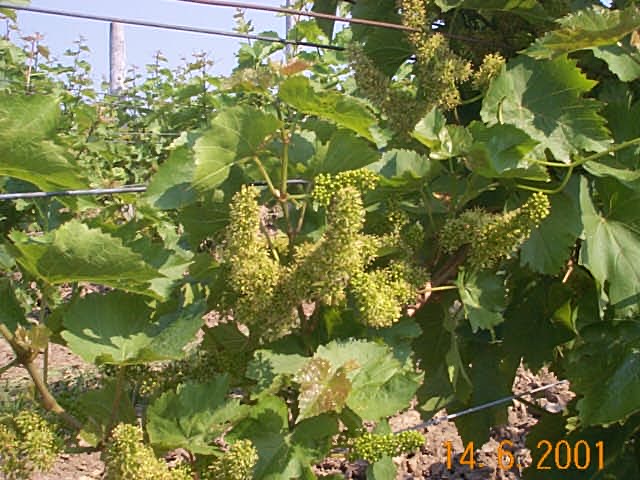
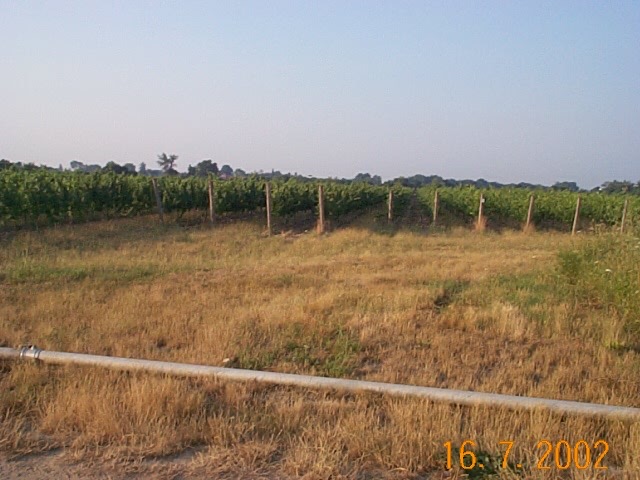
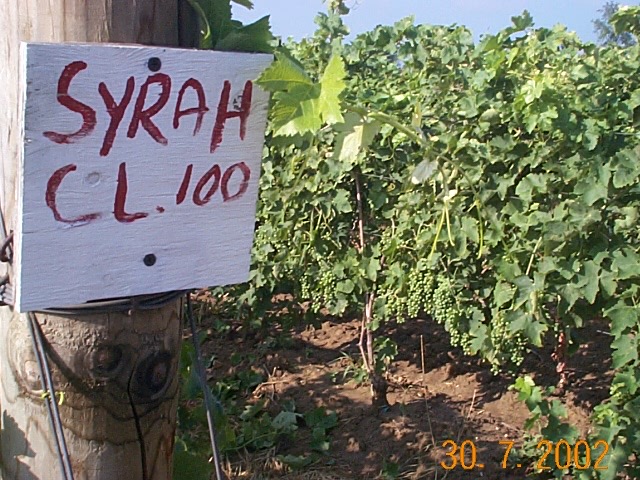
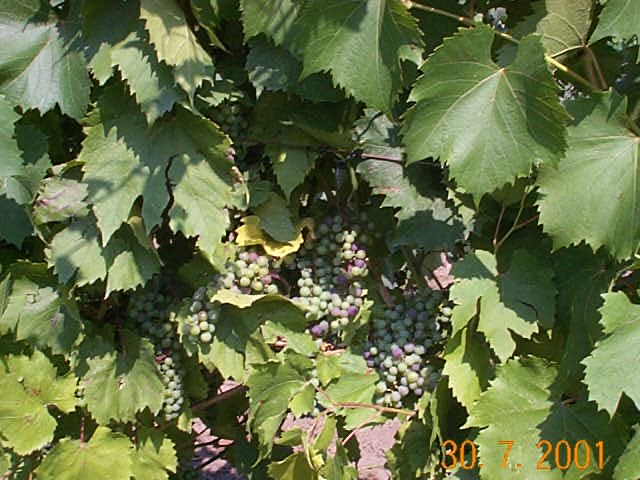
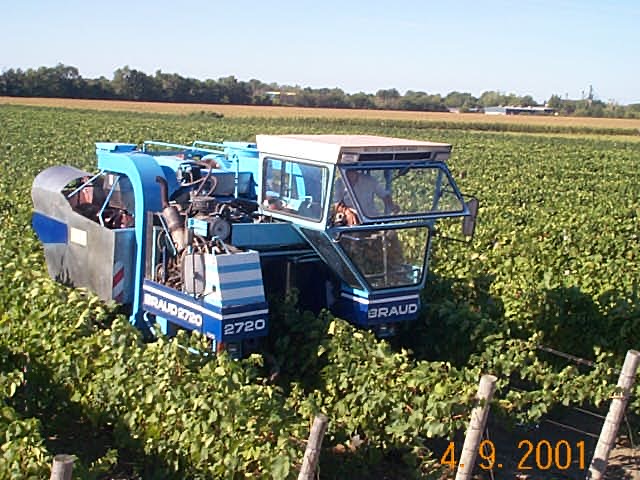
Photographs from the Viticultural Roundtable's own archive, taken in Essex County vineyards in 2001 and 2002 and recovered from the Wayback Machine. The date stamps are the cameras' own. They are small and dated, and they are the only pictures of this region's vine year that this site can show you from the people who farmed it.
The vine year right now
Live readings for one site in each region, refreshed every six hours: the temperature now, today's range, the coldest overnight low in the coming week, and the season's growing degree days so far against the same date last year. Degree days, base ten, are the standard measure of how far a season has run; a total ahead of last year at the same date means an earlier, riper harvest, and a low near zero in spring or autumn is the number a grower watches.
| Region | Now | Today high / low | Lowest low, next 7 days | Growing degree days since 1 April |
|---|---|---|---|---|
| Lake Erie North Shore Harrow | 4° | 16° / 4° | 4° | 1785 1699 by this date last year |
| Niagara Peninsula Vineland | 7° | 19° / 4° | 4° | 1543 1541 by this date last year |
| Prince Edward County Picton | 3° | 14° / 2° | -1° frost risk | 1344 1374 by this date last year |
Harvest. Early varieties are in, reds are ripening, and rain is the enemy. Degree days above last year mean a riper vintage.
Updated Oct 25, 2026, 8:23 a.m. Eastern. Readings and forecasts from Open-Meteo for Harrow, Vineland and Picton; growing degree days are base 10 °C summed over daily means from 1 April, to the latest day the archive has. For frost warnings use Environment Canada; for bud-hardiness readings use Brock University's VineAlert.
January and February: dormancy and pruning
The vines are dormant and at their hardiest, and this is when the icewine crop, if there is one, is finally picked, on the coldest nights before dawn. Pruning begins as soon as the icewine is in and continues through the winter: the grower removes most of last year's growth, leaving a chosen number of buds to carry the coming crop. Pruning is the single most important decision of the year for yield and quality, and in Ontario it is deliberately done late and generously, because a hard freeze can still kill buds and the grower wants spares. The main hazard is exactly that: an arctic outbreak taking temperatures below what the buds can survive. Wind machines run on the worst nights.
March: the dangerous thaw
The vines begin to lose their cold hardiness as the days lengthen, and a mild spell followed by a hard freeze in March does more damage than a colder night in January would have. Pruning is finished, prunings are removed or mulched, and the soil hilled over the graft unions in autumn is left in place a little longer. In Prince Edward County the buried vines stay buried.
April: sap rise and uncovering
The vines "bleed", pushing sap from pruning cuts as the roots wake, and the buds swell. Growers uncover buried vines and pull the hills away from the trunks, tie down the canes to the wires, and repair trellis. Bud counts tell them how much winter damage there was and whether to adjust the pruning. Frost risk is real from now on.
May: bud break
Buds open in early May, later near the lakes than inland, and the vine is at its most vulnerable to frost: a green shoot dies at a degree or two below zero, and a frost at this stage can take the primary crop. Wind machines run on clear, still nights. Shoots grow fast through the month, and the first spraying for fungal disease begins as the leaves open.
June: flowering
The vines flower around the middle of June. Grape flowers are small and self-pollinating, and what they need is warm, dry weather for a week or two; rain and cold at flowering reduce fruit set and can cost a meaningful share of the crop before it exists. Shoot positioning and the first pass of leaf removal begin, and the disease-control programme is at its most intensive.
July: fruit set and canopy
The berries set and begin to size; the canopy is at full growth and the grower is managing it, hedging the tops, positioning shoots, opening the fruit zone to light and air. In a dry year the sandy sites on the Lake Erie North Shore may need water; in most years Ontario's rainfall is enough. Hail is the July hazard, brief and local and capable of stripping a block in minutes.
August: veraison
The berries soften and, in red varieties, turn colour, marking the switch from growth to ripening. Sugar rises, acid falls, and the grower begins sampling. Crop thinning, dropping excess clusters so the rest ripen fully, is done now if it is done at all. Bird pressure starts as the fruit sweetens, and nets go on the earliest varieties and on anything destined for icewine.
September: harvest begins
The early varieties, sparkling-wine base and the first whites, are picked from early September, and the harvest builds through the month. The lakes are now doing their work, holding off the first frost and stretching the season. The September hazard is rain: a wet month brings rot into the clusters and forces the choice between picking early and losing ripeness or waiting and losing fruit.
October: the reds
Cabernet Franc, Merlot and the other reds come in through October, the latest varieties in the last days of the month or the first of November on the warmest sites. The leaves turn and fall. As blocks are picked, the grower begins hilling soil over the graft unions for winter, and in Prince Edward County the burying starts as soon as the leaves are down.
November: shutting down
The vineyard is put to bed: hilling and burying finished, nets tightened on the icewine blocks, equipment stored. The vines are hardening off, and the grower wants a gradual cooling rather than a sudden freeze, so the wood acclimatises fully before the real cold arrives.
December: waiting for minus eight
The icewine grapes hang under their nets, shrivelling and losing a share of the crop each week to rot and wind, and the grower watches the forecast for the first night at minus eight or colder. In a normal year it comes in the second half of December or in January; in a warm year it comes late and small. When it comes, the crews go out in the dark. The icewine page has the rest.
The variation between regions
| Stage | Lake Erie North Shore | Niagara | Prince Edward County |
|---|---|---|---|
| Bud break | late April to early May | early to mid May | mid May |
| Flowering | early June | mid June | late June |
| Veraison | late July to early August | mid August | late August |
| Main harvest | September to mid October | September to late October | late September to October |
| Icewine pick | December to January | December to January | rare |
These are typical windows, not rules, and a warm or cold year shifts everything by one to two weeks. The climate page explains why the regions differ.
The practices behind the year
Five of the jobs in this calendar are decisions rather than tasks, and each has its own page. Pruning sets next year's crop and, in this province, has to be counted against the buds winter has already killed. Trellis and training fix the shape of the vine for thirty years, under a constraint no warmer region has. Winter protection is the hilling, burial and wind machines that keep vinifera alive here at all. Disease management is mostly canopy work rather than spraying, and it is why the hybrids cost less to farm. Harvest and Brix covers how ripeness is measured and the legal thresholds the picking date has to clear.
The original ontariograpes.com kept its calendar of grower meetings and field days at this address. Current event calendars are published by the regional associations listed on the resources page.